
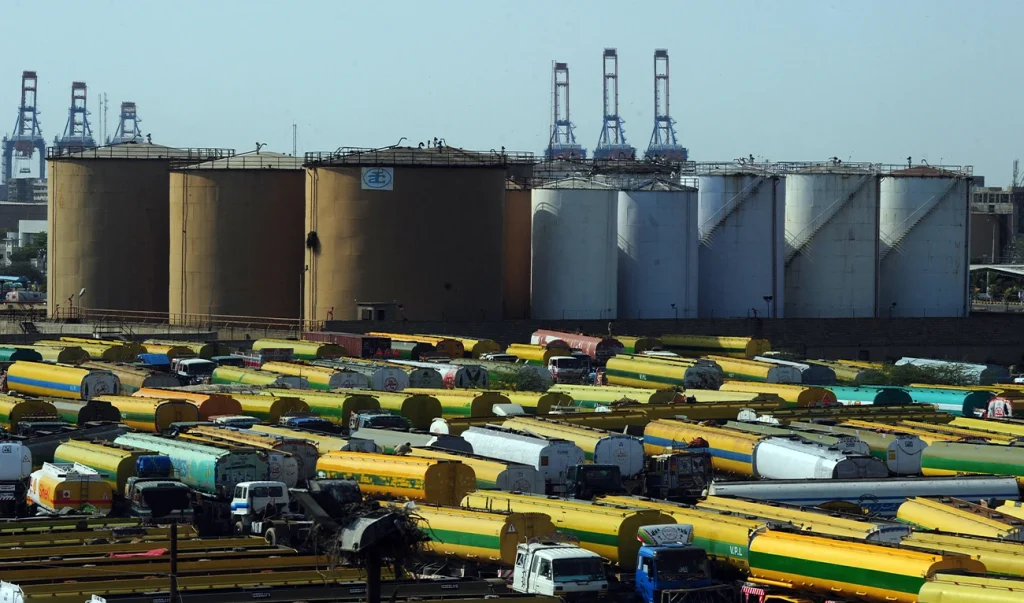
ISLAMABAD: Pakistan’s five oil refineries are expected to sign agreements with the government on Sept. 3 to begin a long-delayed modernization program that could unlock around $6 billion in investment, an industry source familiar with the matter told Arab News on Tuesday.
The agreements will bring Pak Arab Refinery Limited, Pakistan Refinery Limited, National Refinery Limited, Cnergyico and Attock Refinery Limited under Pakistan’s revamped Brownfield Refinery Upgradation Policy, which is designed to increase production of cleaner fuels and reduce the country’s dependence on imported petroleum products.
Officials from the petroleum ministry, Inter State Gas Systems, which develops and implements energy infrastructure projects, and the refineries have been meeting daily to finalize the agreements ahead of the planned Sept. 3 signing, the source said.
“Yesterday, there was a meeting for agreement finalization,” one industry source said. “Today, there is a daily meeting to finalize the draft of the agreement. And the preparation for the agreement is being done on Thursday.”
“Yes, the agreement is being signed,” the source continued, adding all five refineries were expected to sign it together on Thursday.
Pakistan’s petroleum ministry said last week all five refineries were ready to sign agreements “early next month,” with the planned upgrades expected to attract more than $6 billion in investment.
Petroleum Minister Ali Pervaiz Malik has said the modernization will allow local refiners to produce Euro-5 standard fuels and reduce dependence on imported petrol and diesel.
The policy, first introduced in 2023 and subsequently amended, gives existing refineries incentives to modernize plants, increase petrol and diesel output and sharply reduce production of lower-value furnace oil. The latest version was approved in July after years of delays and policy disputes.
Inter State Gas Systems, or ISGS, was designated in August as the entity responsible for implementing the policy on behalf of the Petroleum Division, including signing upgrade agreements, monitoring projects and administering refinery upgrade accounts.
The signing, however, will only start a lengthy development process.
“Agreement signing is the first step,” the industry source said. “After that, people will do their feasibility. The technical studies. It’s like a seven-year project.”
Each refinery will undertake its own feasibility work, engineering studies and investment program.
Pakistan currently has crude-processing capacity of around 350,000 barrels per day across the five refineries, but the sector has struggled with aging infrastructure, lower-value output and competition from imported fuels.
The government says modernization is critical to energy security, particularly after recent disruptions to international supply routes amid the Iran war.
Petroleum ministry spokesman Zafar Abbas did not respond to questions seeking comment on the planned signing date or other details of the projects.
Source: Arabnews.pk