Archives

Pakistan refining policy: PRL executes upgrade agreement with OGRA

Pakistan refining policy: PRL executes upgrade agreement with OGRA

Pakistan Refinery Limited (PRL), one of the country’s largest oil refineries, has successfully executed an upgrade agreement with the Oil & Gas Regulatory Authority (OGRA)

This was done in accordance with the mandatory provisions outlined in the Pakistan Oil Refining Policy for the Upgradation of Existing/Brownfield Refineries, 2023.

PRL shared the development in a notice to the Pakistan Stock Exchange (PSX) on Thursday.

“Swiftly responding to regulatory mandates, PRL has successfully executed the upgrade agreement with OGRA within the stipulated three-month window under the policy delineating key commitments, project milestones and intricate project details,” read the notice to the bourse.

Zahid Mir, the Managing Director and CEO of PRL, underscored the strategic importance of this commitment, stating, “PRL stands at the forefront of the industry’s evolution, aligning seamlessly with the directives of the Policy.”

“Our prompt execution of this agreement signals our unwavering dedication to catalyzing the modernization and efficiency of Pakistan’s refining sector,” he said.

Meanwhile, Masroor Khan, Chairman of OGRA, emphasized the transformative impact of regulatory compliance.

“The mandatory stipulations in the Pakistan Oil Refining Policy are strategically designed to act as a catalyst for the metamorphosis of brownfield refineries,” said Khan. “OGRA is pleased to oversee and support PRL in meeting and exceeding these obligations, thereby contributing significantly to the sustainable development of Pakistan’s oil and gas sector.”

PRL said that it remains dedicated to the Refinery Expansion & Upgrade Project (REUP) initiative, which not only aims to upgrade existing facilities but also to double capacity, produce Euro V standard fuels, and elevate operational efficiency.

Source: https://www.brecorder.com/news/40273619/pakistan-refining-policy-prl-executes-upgrade-agreement-with-ogra

Renewable energy: China can sculpt a sustainable blueprint for Pakistan

Renewable energy: China can sculpt a sustainable blueprint for Pakistan

On the 10th anniversary of China’s influential Belt and Road Initiative (BRI), the evolving partnership between Pakistan and China can potentially lead the charge towards a sustainable tomorrow.

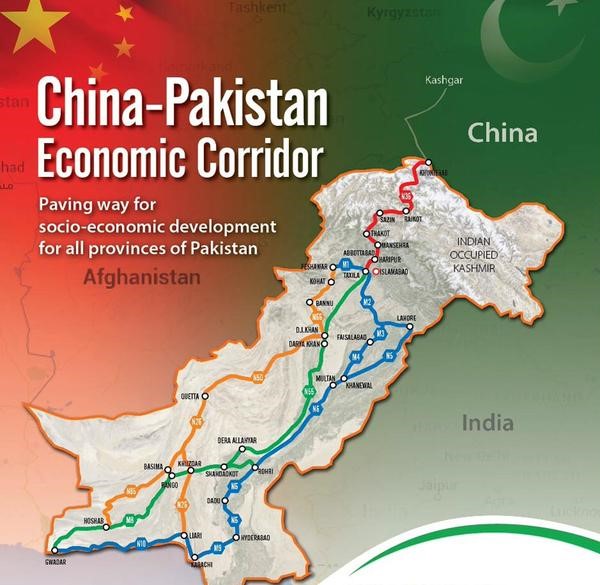
At the heart of this transformative journey lies the China-Pakistan Economic Corridor (CPEC), which now emerges not just as a symbol of enduring friendship but could also become a beacon for global environmental stewardship.

To this end, Renewables First (RF) in partnership with People of Asia for Climate Solutions (PACS) released a brief emphasising China’s unparalleled potential in steering this shift toward green energy.

“With its global leadership in the Renewable Energy domain, China can sculpt a sustainable blueprint for Pakistan, serving as a model for other nations on the BRI corridor,” stated the report.

Historically, CPEC’s infrastructural progress, heavily backed by Chinese investments, leaned predominantly on coal projects. This demands pivoting towards renewable energy deployment going forward to address the underlying environmental footprint of previous projects.

The report underscores, “In a rapidly changing world where climate vulnerabilities threaten geopolitical and socioeconomic landscapes, the thematic core of projects like CPEC must resonate with global sustainability aspirations.”

Tom Xiaojun Wang, Executive Director of PACS, reflected on this evolution, stating, “Under the BRI, there are important corridors, such as CPEC, that connect countries with China through mutually agreed, designed, and constructed sustainable projects.”

Ranking amongst the most vulnerable countries to climate change poised with river flow reductions, alarming glacial melt rates, and frequent catastrophic flooding, embarking on greener and sustainable development ventures has become an existential necessity for Pakistan.

China’s 2021 landmark decision to curtail overseas coal plant projects, paired with its unwavering commitment to harness renewable energy sources, signals a renewed vision for CPEC.

This strategic alignment is bolstered by Pakistan’s ambitious target of propelling solar and wind share to 30% of its total electricity mix by 2030.

Moreover, opportunities for holistic collaborations are abundant. Beyond the power sector, Pakistan’s initiatives to electrify transport, industrial, and domestic sectors amplify the synergy between the two nations, ensuring benefits that extend beyond borders.

Economic setbacks, such as Pakistan’s challenges in managing power payments, emphasise the dire need for both environmentally prudent and fiscally strategic collaborations.

Companies like Goldwind are already making substantial inroads in Pakistan’s renewable energy sector.

But the landscape promises further expansion. Solar and wind energy sectors are forecasted to surge dramatically in the next decade, further elevating CPEC as an emblematic epicentre for green investments.

“China and Pakistan are poised at a unique intersection of economic growth and environmental diligence,” said Muhammad Basit Ghauri, Sr. Associate at RF. “Blending economic aspirations with environmental tenets can redefine CPEC, transforming it from a mere infrastructural marvel to a global touchstone in sustainable overseas development,” he further explained.

As the world grapples with the challenges of climate change, initiatives like CPEC become instrumental in crafting a responsive strategy. By harnessing China’s global green initiatives and leveraging Pakistan’s expansive renewable energy potential, the ensuing decade of CPEC promises a narrative of progress, prosperity, and above all, sustainability.

Source: https://www.brecorder.com/news/40268264/renewable-energy-china-can-sculpt-a-sustainable-blueprint-for-pakistan

CPEC: Driving Regional and International Growth and Development

CPEC: Driving Regional and International Growth and Development

The China-Pakistan Economic Corridor (CPEC) is a transformative initiative set to reshape the economic landscapes of China, Pakistan, and the broader region. This extensive project encompasses infrastructure, energy, and industrial development, acting as a catalyst for growth, connectivity, and collaboration. In this comprehensive overview, we’ll explore CPEC’s regional and international impact, focusing on its effects on China, Pakistan, neighbouring countries, and the global community.

I.CPEC and Regional Integration:

CPEC has significantly bolstered regional connectivity, creating a network linking China, Pakistan, and neighbouring countries. The Gwadar Port, a pivotal component of CPEC, serves as a gateway to the Arabian Sea, offering trade potential for landlocked Central Asian nations. Enhanced connectivity and trade facilitate economic integration and propel regional development. Infrastructure projects, including highways, railways, ports, and airports, improve transportation networks, trade facilitation, and economic growth.

II.Socio Economic Development:

CPEC offers significant employment opportunities and job creation across various sectors, leading to reduced unemployment and poverty. Special Economic Zones (SEZs) promote industrial cooperation, foreign investment, and technology transfer, spurring economic diversification in agriculture, textiles, manufacturing, and information technology.

III. China-Pakistan Relations:

CPEC deepens China-Pakistan relations, reinforcing their long-standing friendship and strategic partnership. The collaboration fosters political cooperation, economic ties, and people-to-people exchanges, strengthening the bond between the two nations. This collaboration also enhances Pakistan’s security and stability, contributing to regional peace and countering various security challenges.

IV. Regional Impact:

CPEC acts as a bridge between Central and South Asia, promoting regional connectivity and cross-border trade. It provides neighboring countries, such as Afghanistan and Iran, with opportunities for enhanced trade and access to international markets. This regional economic integration promotes economic development, peace, and stability across the region.

V. International Significance:

CPEC has gained international attention due to its potential to reshape global trade dynamics. It offers an alternative route for China’s trade with Europe, bypassing the traditional sea route. This diversification serves as a vital pillar of China’s Belt and Road Initiative (BRI), fostering international economic integration. CPEC also emphasizes sustainable development in the energy sector, promoting renewable energy sources and reducing reliance on fossil fuels.

VI. Challenges and Mitigation Strategies:

The successful implementation of CPEC faces security challenges due to regional conflicts and terrorist activities. Pakistan and China must work closely to address these concerns by strengthening security measures and promoting stability. Additionally, addressing potential socioeconomic disparities is crucial to ensure inclusive growth and equitable distribution of wealth.

VII. The Way Forward: Collaboration and Cooperation:

Policy coordination among participating countries is essential to fully harness the potential of CPEC and maximize its benefits. Engaging all stakeholders, including local communities, civil society organizations, and private sector entities, is crucial for sustainable and inclusive development under CPEC. Investing in human capital development and skill training programs is vital to create a competent workforce that can contribute effectively to the implementation and management of CPEC projects.

VIII. Global Economic Impact and Belt and Road Initiative (BRI):

CPEC holds immense significance in promoting trade expansion and economic integration on a global scale. By providing an alternative trade route between China and Europe, it reduces transportation costs and enhances efficiency, benefiting not only China and Pakistan but also countries along the CPEC route. CPEC is a crucial component of China’s ambitious Belt and Road Initiative (BRI), showcasing its potential to promote regional and international growth.

IX. Regional Collaboration and Harmonious Development:

CPEC promotes the principles of shared benefits and win-win cooperation among participating countries. It encourages joint ventures, technology transfer, and knowledge sharing, fostering collaborative efforts for mutual growth. Cultural exchange initiatives under CPEC contribute to people-to-people connectivity, fostering understanding, respect, and friendship among diverse cultures.

X. CPEC and Sustainable Development Goals (SDGs):

CPEC’s focus on infrastructure development, poverty alleviation, energy security, and sustainable practices aligns with the United Nations’ Sustainable Development Goals (SDGs). By actively addressing these goals, CPEC contributes to global efforts to eradicate poverty, ensure inclusive and sustainable economic growth, and combat climate change.

Xl. Green Initiatives and Environmental Sustainability:

CPEC is committed to promoting sustainable development, placing a significant emphasis on the energy sector’s environmental responsibility. The initiative actively fosters the development of renewable energy sources, including wind, solar, and hydro power. By encouraging the adoption of clean and sustainable energy alternatives, CPEC aims to reduce the region’s reliance on fossil fuels and contribute to global efforts to combat climate change.

The integration of green energy initiatives within CPEC underscores a forward-thinking approach to environmental sustainability. Embracing these renewable energy sources not only diminishes the carbon footprint but also addresses environmental degradation. Moreover, this strategic shift towards sustainable energy aligns with international goals to transition to cleaner and greener energy options.

Through the promotion and utilization of renewable energy technologies, CPEC paves the way for a greener and more sustainable future. By advocating for environmentally responsible practices and investing in clean energy infrastructure, this initiative sets an example for collaborative efforts towards a healthier planet. CPEC demonstrates that economic growth and environmental stewardship can go hand in hand, showcasing a pathway to sustainable development and a better quality of life for all.

XlI. Future Outlook:

The China-Pakistan Economic Corridor (CPEC) stands as a testament to the transformative power of regional cooperation, economic integration and sustainable development. With its potential to drive regional growth, enhance connectivity and foster collaboration among countries, CPEC is a pathway towards a prosperous and interconnected future.

As CPEC continues to unfold, it will be crucial to address the challenges that may arise, such as security concerns, socioeconomic inequalities, and environmental impact. By implementing appropriate mitigation strategies, fostering stakeholder involvement, and strengthening policy coordination, these challenges can be overcome, ensuring the successful realization of CPEC’s vision.

Looking ahead, the success of CPEC hinges on continued collaboration, transparent governance, and inclusive development practices. By capitalizing on the opportunities presented by CPEC, participating countries can harness its potential to uplift economies, improve infrastructure, promote sustainable practices, and foster a climate of peace and stability.

CPEC serves as an inspiration for other regions and countries aspiring to achieve similar progress through regional collaboration and international partnerships. As the world witnesses the unfolding of CPEC’s immense potential, it becomes evident that this endeavour not only transforms the fortunes of China and Pakistan but also contributes to regional and global economic growth, connectivity and sustainable development.

Source: https://pakobserver.net/cpec-driving-regional-and-international-growth-and-development/

Pakistan, US agree to step up cooperation in energy sector

Pakistan, US agree to step up cooperation in energy sector

United States on Wednesday offered help in Pakistan’s energy sector and said the details of the projects where economic cooperation could be enhanced are being worked on. Wilbur Ross, Secretary Commerce of the United States of America, made these remarks in a meeting with Adviser to the Prime Minister on Finance and Revenue Abdul Hafeez Shaikh here at the Finance Division.
READ MORE: PM Khan to give away Ehsaas undergraduate scholarships today

In line with the mutual desire on the part of both US and Pakistani leadership to intensify economic engagement with particular focus on trade and investment, Wilbur Ross, undertook a bilateral visit to Islamabad on 26th February, 2020. The said visit was outcome of recently held discussions of Prime Minister Imran Khan and President Donald Trump to promote bilateral trade and enhanced economic engagement.

The adviser welcomed the secretary commerce and said that Pakistan and United States had maintained a durable relationship over the years and there was a need to build it further. The Adviser said that the arrival of the delegation from the commerce sector is good news for Pakistan and would have positive consequences for the country. “This is at a time when the government is looking forward to a major boost in exports after offering concessions to the export oriented sector of Pakistan.”

The adviser said that Pakistan was trying to carve out a new progressive image in the comity of nations. “We have tried to follow the FATF action plan to a significant level, opened our markets to the foreign investors by providing ease of doing business and we are trying to build our image as a tourism-friendly and investment-opportunity country in the region.” The adviser also shared the updates on the economy with the US Secretary of Commerce. He said that though the country is trying to revive the economy through stabilization reform and inviting foreign investment to the country as well as taking care of its vulnerable, the rising prices of food items, high energy prices and slow revenue generation were issues that concerned him.

He said that the government’s efforts are directed towards providing ease to the common man and it would require guidance from its global partners as well. The trade between the two countries is only around $7 billion and the country has an urgent need to increase that to help in GDP growth which requires long term planning for economic development. He said that we have made a mistake in the past of not forming our alliances on the economic front based on our developmental requirements. He felt this was the time to enable the relationship to become more long lasting on a firm footing. The Adviser said that he hopes that a healthy interaction shall continue in future as well.
READ MORE: Over 1,400 more Pakistani citizens return from Iran

US Secretary Commerce also met Abdul Razak Dawood, Advisor to Prime Minister on Commerce, Industries & Production and Investment. The issues related to bilateral trade and enhanced market access to Pakistan were discussed. The Adviser told the visiting delegation that after achieving economic stability, the government under the leadership of Prime Minister Imran Khan is now focusing on job creation and export augmentation by encouraging foreign investments. He suggested that this is high time for US companies to invest in Pakistan. He also took up the issue of early convening of the long awaited 9th session of Trade and Investment Framework Agreement (TIFA) meeting as well as the visit of US business delegation to Pakistan to participate in the Business Opportunities Conference in order to forge a better networking among the private sectors of both countries. The adviser also suggested that the U.S. International Development Finance Corporation (IDFC) should help in developing of new businesses in Pakistan. Wilbur Ross said that his visit to Pakistan is part of his government’s desire to increase trade relations with Pakistan. He also believed that such links between both the counties would not only enhance trade but encourage further expansion of ties in all fields of economic engagement. About IDFC assistance, Secretary Ross sounded positive and suggested that Ministry of Commerce should propose projects in this regard.

US Secretary of Commerce also called on Minister for Energy, Omar Ayub Khan. The energy minister gave an overview of Pakistan’s energy sector and the present government’s earnest endeavours in reforming this sector. These efforts are being personally overseen by the Prime Minister of Pakistan himself. Omar Ayub Khan called for greater US investment in energy sector including areas such as power generation, transmission and distribution, artificial intelligence, renewable energy, hydel energy and training opportunities.

The minister also reaffirmed Pakistan’s commitment to cleaner fuels and green energy. The Special Assistant to Prime Minister on Petroleum, Nadeem Babar informed the visiting side on key actions taken to improve ease of doing business in Pakistan. SAPM also shared how more US investments could be incremental in improving the business relations between both the US and Pakistan. Wilbur Ross said his visit to Pakistan is part of the US government’s desire to increase trade links with Pakistan. He also believed that such links between both the counties would not only enhance trade but encourage further expansion of ties in all fields. Both the sides agreed to step up cooperation in the energy sector.

Source: nation.com.pk

Pakistan invites Malaysia to acquire divested shares

Pakistan invites Malaysia to acquire divested shares

As the government of Pakistan moves to divest shares of local companies, it has invited Malaysia, and its strategic partners, to participate in the process as well as to look at the LNG infrastructure development opportunities. The government also invited their participation in the auction of oil and gas blocks.

Federal Minister Omar Ayub Khan invited Malaysian investors to fully participate in the auction of oil and gas blocks that will be offered to foreign investors shortly with 18 initial blocks in the first phase.

He said this during a meeting with High Commissioner of Malaysia Ikram Muhammad Ibrahim, who called on the minister and Special Assistant to Prime Minister (SAPM) on Petroleum Nadeem Babar on Monday.

Babar also shared the possibility of Petronas acquiring divested shares from the Oil and Gas Development Company (OGDCL), Pakistan Petroleum (PPL) and Mari Petroleum that will be divested to shared partners. He encouraged Petronas to also look favourably at LNG infrastructure development opportunities in Pakistan. He was of the view that Malaysian investors can benefit in areas such as LPG, refinery upgrade etc.

The high commissioner apprised the minister and SAPM about preparations being undertaken for the upcoming visit of Prime Minister Imran Khan to Malaysia. Both the government officials also apprised the envoy about the structural reforms being carried out in the energy sector of the country, with a special focus on ensuring ease of doing business.

While applauding the initiatives, Ibrahim said that Malaysia considered Pakistan in general and particularly the energy sector as having great potential. He was also optimistic on Petronas establishing a strong presence in Pakistan in a cross section of the country’s energy industry.

Divestment of OGDCL’s shares

The government has recently short-listed financial advisers for the divestment of shares. Earlier, rumours pertaining to the transaction led to a plunge in OGDC’s stock price. There had been rumours that the government would offer shares for divestment at a discount of 10%. The finance ministry took strong notice of the situation and also conveyed its concerns to the Privatization Commission and the Securities and Exchange Commission of Pakistan (SECP).

“Following such a situation, the government should offer shares to strategic partners like exploration companies that would also make investment in exploration activities,” background discussions with officials revealed.

The Privatization Commission is in process of finalising appointment of a financial adviser for divestment of up to 7% of its shares in OGDC to meet conditions of the International Monetary Fund (IMF).

It is worth mentioning that in 2014, the Pakistan Tehreek-e-Insaf government in Khyber-Pakhtunkhwa had challenged the Pakistan Muslim League-Nawaz (PML-N) government’s decision of selling 10% shares in OGDC at Rs210 per share or $2 per share in the Peshawar High Court. At the time, the PML-N had appointed the Bank of America Merrill Lynch, Citigroup, and Pakistani broker KASB Securities as financial adviser for execution of the deal. The Privatization Commission had also approved the minimum price/floor price of Rs216 per share for the transaction.

Now, the same commission is working on a lower price with almost same profitability of the company as seen in 2014. The commitment from foreign investors to buy complete 10% share at Rs205 per share remained unmaterialised due to strong protest from the opposition.

The company’s profitability at that time was almost same as in current scenario but this time due to the deteriorating economic conditions it is currently trading at a significantly lower price than its fair value.

OGDC had reported a net profit of Rs124 billion and Rs87 billion in 2014 and 2015, respectively. In 2019, the company reported a profit of Rs119 billion. Moreover, the previous government had offered the share at price-to-earning/price-to-book 8.1/2.3 and now the current government was offering it at PE/PB 5.2/1.0. If the deal is executed at these levels it will cost losses worth Rs20 billion to the national exchequer, said officials.

In order to meet the IMF requirements, the government is also looking for government-to-government deals and has offered Russia, China and Saudi Arabia strategic partnership in OGDC and PPL. Given the strategic importance, it would be more beneficial for Pakistan if a government-to-government deal happens that will bring operational efficiencies in these companies and by increasing exploration activity in un-penetrated areas it will reduce significant reliance on petroleum products imports, said officials.

OGDC is currently trading at a significant discount to its fair value. In a recent strategy report published by Foundation Securities, a Karachi based brokerage house, that have reported that fair value of OGDC would be around Rs242.8 per share in December 2020.

By selling OGDC shares in the stock market it will decrease the government’s shareholding, which is around 85% to 78% and will increase shareholding of private parties. It will also allow them to appoint a director on the board as OGDC has 10 board of directors and will require 10% vote for director appointment, officials said.

Source: Tribune.com.pk

Effective from today: Import of 6,786 items from China exempted from duty

Effective from today: Import of 6,786 items from China exempted from duty

The Federal Board of Revenue (FBR) has granted concessionary rate of customs duty or zero percent duty on the import of 6,786 items from China with effect from January 1, 2020. The FBR has issued SRO 1640(I)/2019 here on Tuesday in supersession of notification SRO 659(I)/2007, dated the 30th June, 2007.

According to the SRO 1640(I)/2019, in exercise of the powers conferred by section 19 of the Customs Act, 1969, and in supersession of notification SRO 659(I)/2007, dated the 30th June, 2007, the federal government has exempted, with effect from January 1, 2020, unless specified otherwise, the import into Pakistan from China of the goods specified from so much of the customs duty specified in the First Schedule as on the 1st January, 2020.

Provided that the goods are manufactured or produced and imported in conformity with the Rules of Determination of Origin of Goods and the operational certification procedures for the Rules of Origin notified by the Ministry of Commerce vide SRO 1286(I)/ 2005, dated 24th December, 2005 read with the Import Policy Order, 2016.

The reduced rate of duty, fixed rate or zero percent duty would be applicable on the import of crude oil (Rs 8000/MT), palm stearin (Rs 9050/MT), RBD Palm oil (Rs 10800/MT), palm olein (Rs 9050.0/MT), pure breeding animals, meat of goats, fish, yogurt, whey powder, butter, dairy spreads, cheese, honey, vegetables, mushrooms, green tea, black tea, rice, beverages, gold, silver, varnishes, artificial staple fibers, vehicles parts, satellite communication equipment, radio navigation apparatus, parts/accessories for cable TV/satellite receivers, energy saving lamps, cameras, energy saving tubes, components for the assembly/manufacture of vehicles in any kit form and other items specified in SRO 1640(I)/2019.

www.brecorder.com

Italian energy giant Eni inaugurates first solar plant in Pakistan

Italian energy giant Eni inaugurates first solar plant in Pakistan

  • Bhit Photovoltaic Plant has a 10MW peak capacity and is expected to produce approximately 20GWh annually.
  • The plant will allow to avoid 144,000 tonnes of CO2 equivalent emissions during its life.

Italian oil and gas giant Enihas inaugurated on Friday the Bhit Photovoltaic Plant in Pakistan, through its subsidiary Eni New Energy Pakistan.

This is Eni’s first solar project in the country. The plant, built in proximity to the Bhit Gas Plant, aims at supporting the upstream operations by providing green energy in an off-grid configuration.

As per the company statement, the Bhit Photovoltaic Plant has a 10MW peak capacity and is expected to produce approximately 20GWh (Gigawatt hours) annually. The output energy will be used on site, reducing gas consumption and avoiding around 144,000 tonnes of CO2 equivalent emissions during plant life.

The photovoltaic plant works in full synergy with the existing power generation system of Bhit gas treatment plant, optimising operational costs with the shutdown one of the existing gas turbines. Exploiting all the synergies in place with its presence, Eni has achieved a short time-to market, with a start-up reached only 6 months after the Final Investment Decision (FID).

“Bhit Photovoltaic Plant, while adding extra value to the traditional operations held in Pakistan, confirms Eni’s commitment towards a low-carbon scenario in which renewable energy plays a pivotal role and is fully integrated in the energy mix,” read the statement.

Earlier, Minister for Energy Omar Ayub said that Pakistan had investment potential of $40 billion in the sector of alternative energy. Pakistan in future could produce 75 percent of electricity from its own indigenous sustainable resources without importing fuel like oil and gas

Eni has been present in Pakistan since 2000 and operates in the upstream sector, where the main permits in the country are Bhit/Badhra (Eni operator with a 40% interest), Kadanwari (Eni operator with 18,42% interest), Latif (Eni 33,3%), Sawan (Eni 23.68%), Zamzama (Eni 17.75%) and Miano (Eni 15,16%). Eni is the Operator of three offshore blocks and is also active in the Midstream sector.

Source: www.brecorder.com

Pakistan sets ambitious target to achieve 75pc of green energy by 2030

Pakistan sets ambitious target to achieve 75pc of green energy by 2030

  • Pakistan’s target of achieving green energy of 64pc by 2025 are very ‘real’, said special assistant to PM on Petroleum Division.
  • Pakistan is now working on hybrid plants, which would have both solar and wind plant at the same site.

With the intention to go green, Pakistan has set itself an ambitious target to achieve 75 percent of green energy in a time span of ten years.

Nadeem Babar, special assistant to the Prime Minister Imran Khan on the Petroleum Division, said that the present government has completely changed the paradigm for energy.

“By 2025, we will have 53pc green energy. By 2030, we will have 64pc green energy. Green means renewable, wind, solar, biomass and hydel. If I add nuclear to it, which is another 10pc, to get the non-fossil category, the number goes up to 75pc. We feel very comfortable with 2025 target,” Babar said at the Abu Dhabi International Petroleum Exhibition Conference, quoted Khaleej Times.

The actions are part of government’s plan to tackle the country’s issues of energy crisis, said Babar. “In Pakistan, we have launched two streams – one is to have huge increase in footprints of renewable and cleaner energy and at the same time we need to reinvigorate our gas industry. In addition to the renewables stream, we are opening our E&P sector big time. We are demolishing regulations, removing approvals and opening it up – launching round of 40 blocks in next 12 months. The first one will start next month.”

Babar added that the ambitious targets of achieving green energy of 64pc by 2025 are very ‘real’. “We have large footprint of hydel generation. If managed properly, it can be mid-merit rather than peaking. Of the 64pc target, half of it is hydel and half is wind and solar. Now what we are doing is working on hybrid solar and wind,” he said.

The hybrid plants would have both solar and wind plant at the same site on combined basis, Babar added.

Earlier, Alternate Energy Development Board (AEDB) reportedly approved at least six wind power projects funded by the World Bank, meanwhile just days ago, the federal cabinet had approved electric vehicle policy that would open new vistas of business and employment.

Under the policy, the target set for next four years was to convert 100,000 cars and 500,000 two and three wheeler vehicles on electric cars. Special Economic Zones (SEZs) have been proposed in the policy to establish local electric car manufacturing units.

Meanwhile, only one percent duty would be charged on battery run vehicles spare parts, which at present stand at 25pc.

Source: www.brecorder.com

Construction of 900MW RLNG based power project to start next month

Construction of 900MW RLNG based power project to start next month

  • The project was conceived in 2016 and after the completion of feasibility studies it was approved and publicly announced in 2017.
  • The 900MW RLNG project will be a highly efficient combined cycle plant with an efficiency of around 60%.
  • KE is already in negotiations with relevant stakeholders for import of 500MW from the under-construction nuclear power plants KANUPP II & III

The construction of K-Electric’s $650 million 900MW RLNG-based Bin Qasim Power Station (BQPS)-III will commence in December 2019, Karachi Electric said in a statement on Monday.

In a statement, the power supplying company said that the project has received all required approvals and is part of KE’s planned initiatives resulting in investments of around US $3 billion across the power value chain over the next few years.

The project was conceived in 2016 and after the completion of feasibility studies it was approved and publicly announced in 2017.

It said although the project timeline has been affected due to delay in finalisation of KE’s multi-year tariff, the power utility is determined to execute it on a fast track, and according to the project contracts signed last month, the plant is expected to start producing electricity by summer of 2021.

According to Moonis Alvi, CEO, KE, “The project is a major private sector investment in the country’s power sector and is in line with K-Electric’s vision of diversifying its fuel mix besides enhancing generation fleet efficiency. We have also re-negotiated the terms of the contract and the first unit of 450MW will be commissioned in only 19 months instead of 24 months, thus greatly reducing the time in which Karachi will start reaping the benefits.

The 900MW RLNG project will be a highly efficient combined cycle plant with an efficiency of around 60%. In addition to bridging the demand for electricity, this plant will also enable us to gradually phase out some units of the aging and less efficient BQPS I plant which have been in service for more than 25 years.

After completion, BQPS-III will result in lower import costs for the government, affordable power for consumers and a much smaller carbon footprint as compared to furnace oil power plants.”

KE continues to move ahead in enhancing generation capacity, both through its own sources as well as independent power producers (IPP) and remains committed to continue investments across the value chain, which will further improve operational performance, thus benefitting consumers.

KE is also actively pursuing the 700 MW coal-fired plant being built in collaboration with China Machinery Engineering Corporation (CMEC). KE has also been actively engaged with the relevant stakeholders for additional off-take from the national grid; however after a detailed study it was intimated to both KE and the Ministry of Energy that national grid could not provide the requested MWs from the existing interconnection infrastructure, on account of overloading and system stability concerns.

Additionally, KE is already in negotiations with relevant stakeholders for import of 500MW from the under-construction nuclear power plants KANUPP II & III and if this additional 500MW is made available to KE, the power utility stands ready to invest in interconnections to evacuate that power to replace the remaining inefficient power plants. However, construction of interconnection facilities will take at least two and a half years following the receipt of required approvals which will also take their due time. So given the robust due diligence, current technical limitations to off-take additional power from the national grid, demand supply gap, transmission situation, efficiency and all related factors – the upcoming 900MW RLNG power plant is very crucial for Karachi and KE is committed to commission the project as soon as possible.

Source: wwww.brecorder.com

ExxonMobil to help build LNG terminal in Pakistan

ExxonMobil to help build LNG terminal in Pakistan

ISLAMABAD: After getting a liquefied natural gas (LNG) supply contract from private-sector consumers, US energy giant ExxonMobil is planning to build the third LNG terminal in Karachi as a joint-venture partner.

Some time ago, ExxonMobil, in collaboration with Pakistan’s exploration and production companies, drilled an offshore well to search for hydrocarbon reserves in the Arabian Sea. However, the effort could not prove successful.

Now, in a new venture with Energas consortium, the US firm is going to invest in setting up an LNG terminal in Pakistan. Earlier, ExxonMobil, the world’s largest publicly traded oil and gas firm, had inked an agreement with Universal Gas Distribution Company (UGDC) – an association of CNG station owners and operators – for LNG supply.

This came after the Pakistan Tehreek-e-Insaf (PTI) government allowed the private sector to utilise the idle capacity of existing LNG terminals and pipelines of public gas utilities. It will break the monopoly of public-sector companies and the private sector will be able to bring LNG at cheaper rates.

Of the five interested companies, only two – Energas and Tabeer Energy (Mitsubishi) – submitted applications on Friday, seeking Letter of Intent (LOI) from the Port Qasim Authority (PQA) for building the third LNG terminal.

At present, two LNG terminals with a total capacity of 1.3 billion cubic feet per day (bcfd) are operational. The new terminals will be built without government guarantees.

PQA’s final date of acceptance for the LOI was October 25. Energas, a consortium led by Lucky Cement and Sapphire – is likely to win the contract.

Energas has been working with ExxonMobil in Pakistan and is a buyers’ consortium with LNG demand from independent power producers (IPPs), textile, cement, and automobile manufacturing plants.

The consortium, which also includes Halmore, plans to build the terminal in collaboration with ExxonMobil.

The successful company will have to pay a fee of $10 million and build the terminal within 24 months. Any future terminal will have to meet these conditions. This concession fee will be used to widen and deepen the existing channel.

The construction of the third terminal at Port Qasim will put some pressure on the existing terminal operators as the new terminal will be built without any financial commitments from the government.

Officials told The Express Tribune that Engro, which was operating the first LNG terminal, did not participate in bidding for the third terminal as it wanted to expand the capacity of its existing terminal. It has the required land and has planned to set up an onshore LNG terminal as well.

Turkish firm Global Energy also did not take part in the bidding process. According to sources, Global Energy has conveyed to the PQA that it had already secured an LOI in 2011 under the then LNG Policy 2011.

The company has also acquired land and has a valid licence from the Oil and Gas Regulatory Authority (Ogra). It has already conducted surveys and has a valid performance bond. Therefore, the company is working on the LNG terminal in compliance with the LNG Policy 2011.

However, private-sector investors have raised concern over government conditions. Under the new contract terms, private-sector companies will build the LNG terminal at their own risk without any government guarantee. The government, however, will collect a higher fee of $10 million.

In addition to that, the terminal building company will have to submit a performance bond worth $10 million. It will also have to give an LNG offtake guarantee for 250 million cubic feet per day and will have to submit a performance bond worth $3 million in this regard.